
Introduction
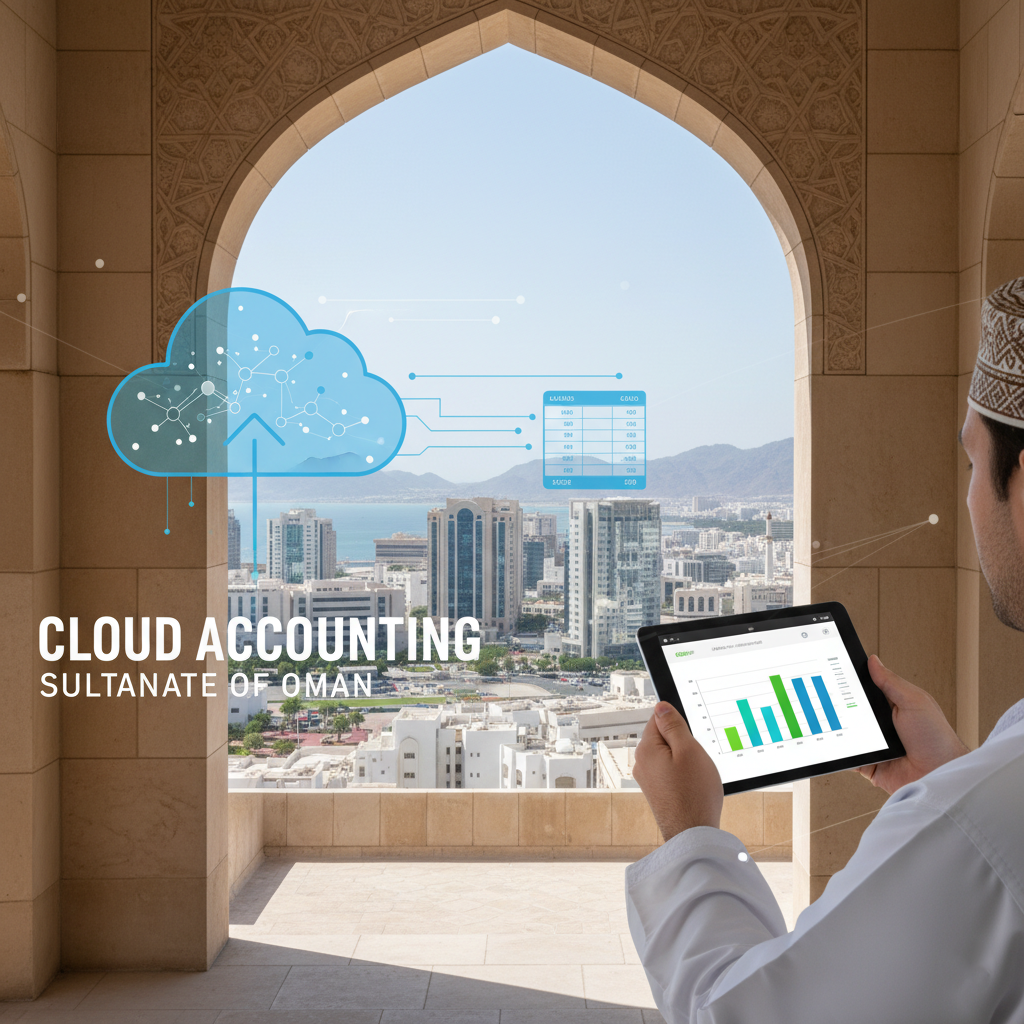
The accounting profession is undergoing rapid transformation driven by technological innovation and the global digital economy. One of the most significant developments in recent years is cloud accounting, which has reshaped how financial information is processed, stored, and accessed. In the Sultanate of Oman, cloud accounting is increasingly recognized as a strategic tool for improving accounting efficiency, accuracy, and transparency across government institutions, companies, banks, and small and medium enterprises (SMEs)
Cloud accounting aligns closely with Oman’s national digital transformation initiatives and supports the objectives of Oman Vision 2040, which emphasizes efficiency, transparency, and sustainable economic growth.
Understanding Cloud Accounting
Cloud accounting refers to the use of accounting software hosted on remote servers and accessed via the internet. Unlike traditional accounting systems that rely on local computers, paperwork, and manual data processing, cloud accounting enables users to access real-time financial data from any location using a web browser.
This model allows organizations to process complex accounting operations, generate financial statements, and manage financial records efficiently without being constrained by physical infrastructure. It also enables multiple users to work on the same system simultaneously, improving coordination and operational speed.
Problem Statement and Need for Change
Traditional accounting systems face several challenges, particularly in government institutions and companies that rely heavily on manual processes. These challenges include:
- High costs associated with employing highly qualified accountants
- Increased risk of human error and data duplication
- Difficulty accessing financial information in a timely manner
- Exposure of accounting data to theft, loss, or natural disasters
- Delays in financial reporting across departments
The lack of awareness and technical knowledge among accounting professionals regarding cloud accounting further slows its adoption. These limitations highlight the urgent need for modern accounting systems that enhance efficiency and protect financial information.
Why Cloud Accounting Matters for Oman
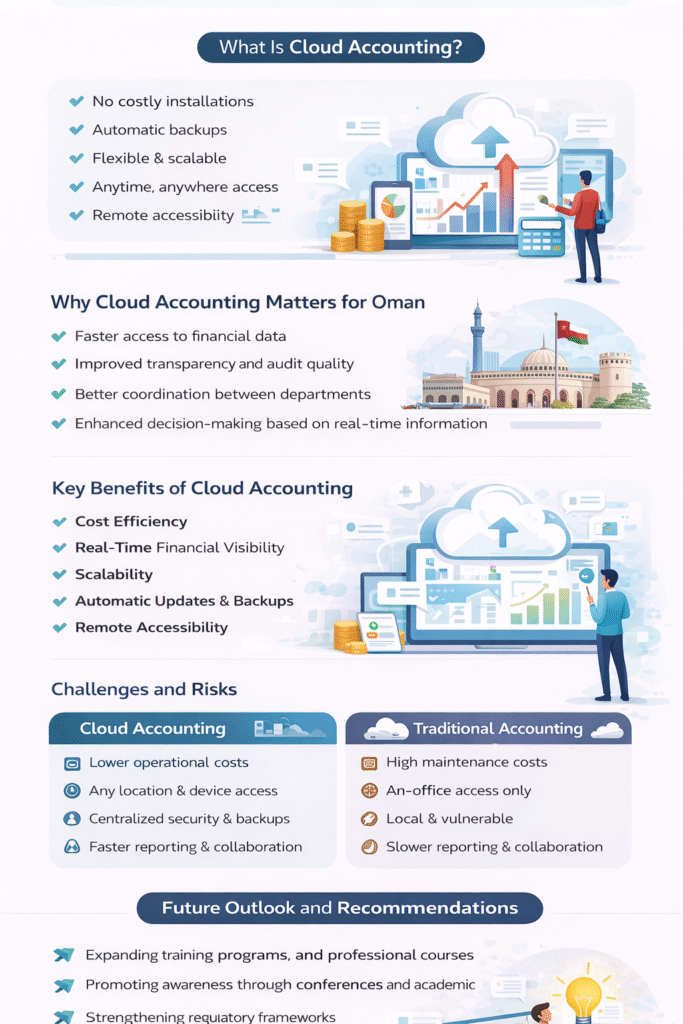
Oman’s integration into the digital economy has created strong demand for advanced financial management systems. Cloud accounting enables organizations to:
- Access financial data instantly and securely
- Improve transparency and audit quality
- Support faster and more accurate decision-making
- Reduce dependency on paperwork and physical storage
- Enhance collaboration between departments and stakeholders
The adoption of cloud accounting in government and private institutions contributes to smoother financial operations and supports long-term economic development in the Sultanate.
Key Benefits of Cloud Accounting
The study highlights several advantages of cloud accounting systems, including:
Cost Efficiency
Cloud accounting significantly reduces costs related to software installation, maintenance, and system upgrades. This is particularly beneficial for SMEs that operate with limited capital and resources.
Real-Time Financial Visibility
Organizations can monitor their financial position in real time, enabling faster responses to financial issues and more informed strategic planning.
Scalability and Flexibility
Cloud systems allow institutions to expand storage and processing capacity easily as business needs grow, without major infrastructure investments.
Automatic Backups and Security
Cloud accounting platforms provide centralized data storage with automated backups, reducing the risk of data loss and improving disaster recovery capabilities.
Remote Accessibility
Users can access financial data anytime and anywhere using an internet connection, supporting flexible work environments and improved efficiency Cloud Accounting and its Adopti….
Challenges and Risks of Cloud Accounting
Despite its benefits, cloud accounting adoption faces several challenges:
- Data Security Concerns: Fear of data breaches and unauthorized access remains a major barrier.
- Internet Dependency: Cloud systems rely on stable internet connectivity, and network limitations can affect performance.
- Resistance to Change: Some accounting professionals lack confidence in cloud platforms due to limited training and awareness.
These challenges are not permanent. With advancements in cybersecurity, stronger servers, improved internet infrastructure, and growing professional familiarity, many of these risks are expected to diminish over time Cloud Accounting and its Adopti….
Cloud Accounting vs. Traditional Accounting
The study highlights clear differences between cloud-based and traditional accounting systems:
| Cloud Accounting | Traditional Accounting |
|---|---|
| Lower operational costs | Higher maintenance costs |
| Real-time data access | Delayed information |
| Centralized backups | Risk of data loss |
| Remote accessibility | Office-based access only |
| Faster reporting | Slower manual processes |
Cloud accounting offers a more efficient, secure, and future-ready alternative to manual accounting systems.
Impact on the Accounting Profession
Cloud accounting is not only a technological shift but also a transformation of the accounting profession itself. It reduces repetitive manual tasks, allowing accountants to focus more on analysis, advisory services, and strategic decision-making. Over time, cloud accounting is expected to enhance professional standards, improve compliance, and increase the overall quality of accounting work in Oman.
Future Outlook and Recommendations
Based on the study, several recommendations are proposed to accelerate cloud accounting adoption in Oman:
- Implement training programs and professional courses on cloud accounting
- Promote awareness through conferences and academic platforms
- Adopt international accounting standards when using cloud systems
- Strengthen internet infrastructure and server capacity
- Encourage SMEs to adopt cloud accounting due to its affordability and efficiency
Government institutions and private sector organizations are strongly encouraged to embrace cloud accounting as a strategic tool for achieving the objectives of Oman Vision 2040.
Conclusion
Cloud accounting represents a fundamental shift toward smarter, faster, and more secure financial management. While challenges such as security concerns and resistance to change exist, the long-term benefits far outweigh the risks. As adoption continues to expand across the Sultanate of Oman, cloud accounting will play a critical role in modernizing the accounting profession and supporting sustainable economic growth.